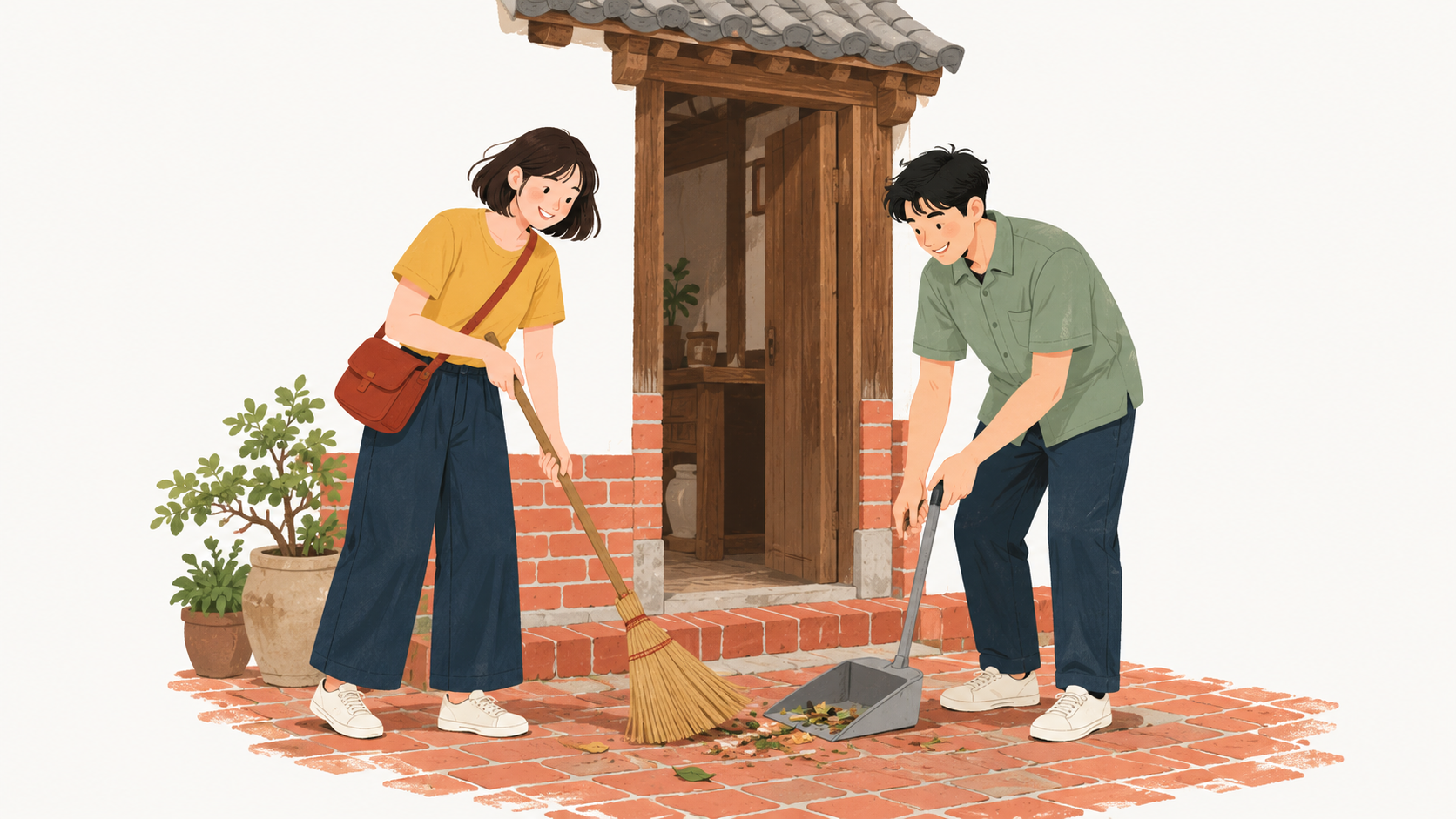
Let’s have some interesting Mandarin Reading and get to know about 鹿港囝仔 (Lukang Kids)! It is a team founded by Zhang Jing-Ye (張敬業) and friends to make their hometown a place young people want to stay in; 囝仔 is a Taiwanese word for “kid.”

一句話簡介 Intro in a Sentence
前面幾篇提到的老房子、藝術節,其實都是同一群人做的。
文章 The Text
前面幾篇文章裡,我們看到老房子變成咖啡廳、小鎮辦藝術節。這些事情,其實都是同一群人做的。
這群人裡面,有一個人叫做張敬業。他是鹿港人,但是以前不住在鹿港,他去外地讀書、工作。
後來,他決定回來。他回來的時候,發現很多年輕人跟他一樣,離開家鄉,去大城市生活。他覺得,這樣下去,家鄉會越來越沒有人。
所以,他跟一群朋友,一起成立了一個團隊,叫做「鹿港囝仔」。「囝仔」是台語,意思是「小孩」。
他們想做的事情很簡單:讓家鄉變成一個年輕人願意留下來的地方,而不是只能離開的地方。
我覺得,這是一個很有力量的想法。
單字 The Words
| 中文 | Pinyin | English |
|---|---|---|
| 家鄉 | jiā xiāng | hometown |
| 外地 | wài dì | somewhere else, away from home |
| 決定 | jué dìng | to decide |
| 年輕人 | nián qīng rén | young people |
| 離開 | lí kāi | to leave |
| 成立 | chéng lì | to found, establish |
| 團隊 | tuán duì | team |
| 台語 | tái yǔ | Taiwanese (Hokkien) |
| 留下來 | liú xià lái | to stay |
| 力量 | lì liàng | strength, power |
翻譯 The Translation
In the previous readings, we saw an old building become a cafe and a small town hold an arts festival. It turns out these are all things done by the same group of people.
Among this group is a man named Zhang Jing-Ye. He’s from Lukang, but he didn’t always live there — he went away to study and work.
Later, he decided to come back. When he came back, he noticed that a lot of young people were like him — leaving their hometowns to live in big cities. He felt that if this kept happening, hometowns like his would end up with fewer and fewer people.
So he and a group of friends together founded a team called “Lukang Kids” (鹿港囝仔). “囝仔” is a Taiwanese (Hokkien) word meaning “kid” or “child.”
What they wanted to do was simple: make their hometown a place young people want to stay in — not just a place they have to leave.
I think that’s a pretty powerful idea.
Notice This
- 越來越 — 家鄉會越來越沒有人 = “the hometown would have fewer and fewer people.” 越來越 + adjective/verb is the go-to pattern for describing a trend that keeps intensifying.
- 囝仔 is Taiwanese, not Mandarin — 囝仔 (kiánn-á) is a Taiwanese (台語) word for “child,” borrowed straight into everyday Mandarin speech in Taiwan. You won’t find this used the same way in mainland Chinese.
- 不是只能…,而是… — 而不是只能離開的地方 = “not just a place you can only leave.”
Try It Yourself
試著用一句話說說看,你身邊有沒有「一群人默默在做同一件有意義的事」的例子。
Try it: do you know some people around you are doing something meaningful?
Leave a Reply