What does an ordinary week actually look like in Taiwan — not Taipei, not the MRT, just the small-city life? This easy and short beginner Taiwanese Mandarin story follows one student’s week in Taichung.
If you’ve only ever learned “China Mandarin” vocabulary for daily life, this one’s going to feel different — in a good way.
本文 The Story
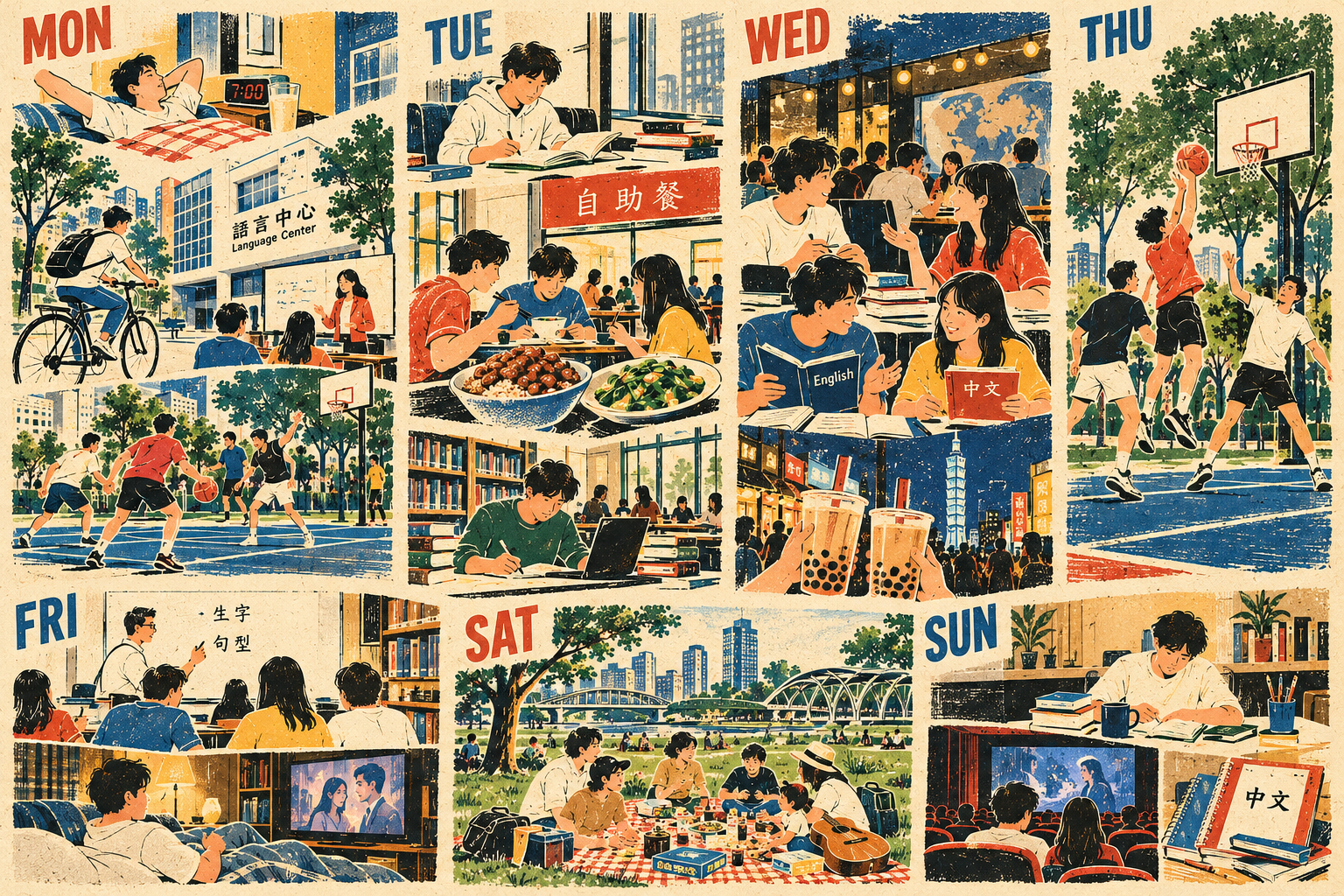
星期一 早上七點,我起床。我先喝了一杯豆漿,再去語言中心上課。我在台中當交換學生,語言中心離家不遠,我騎腳踏車去上課。今天的課是聽力和會話,老師說話有點快,有點難,但很有趣。下課以後,我跟同學一起去運動場打球,我覺得很開心。
星期二 我比較早起,因為早上有閱讀課。中午時,我跟同學一起去學校附近的自助餐吃飯,我點了滷肉飯跟青菜,很好吃。下午沒有課,我去圖書館寫作業,準備明天的語言交換。
星期三 是我最喜歡的一天,因為晚上有語言交換。我跟台灣朋友一起練習中文和英文,他教我台灣人常說的話,我教他怎麼說道地的英文。我們也聊了很多生活的事,我覺得很有趣。結束以後,我們一起去買珍奶,我喜歡半糖去冰的珍奶。台灣的朋友說這樣太甜了,但我認為:甜食就是要甜,不是嗎?搞不懂台灣人呢。
星期四 下課以後,我跟同學一起打球,我們在學校附近的公園打籃球,打了兩個小時,很累,但是很開心。
星期五 是這星期最後一天上課,我們在教室複習這星期學的生字和句型。下課以後,我覺得很輕鬆,因為明天不用早起。晚上,我在家看台灣的電視劇,順便練習聽力,也休息一下。
星期六 我睡到十點才起床。語言交換的朋友邀請我跟他的家人一起吃午餐,然後我們開車去公園野餐。我們帶了很多台灣小吃,還有一些桌遊。我們在公園裡聊天,過了很開心的一天。
星期日 是安靜的一天。早上,我在家複習中文。下午,我跟朋友一起看電影。晚上,我準備下星期要用的課本和筆記本。
這就是我在台灣的一個星期。每天都不一樣,都很特別。我喜歡上課、跟朋友一起練習中文,也喜歡體驗台灣人的生活。
Pinyin 拼音對照
星期一|xīngqíyī|Monday
Zǎoshàng qī diǎn, wǒ qǐchuáng. Wǒ xiān hē yī bēi dòujiāng, zài qù yǔyán zhōngxīn shàngkè. Wǒ zài Táizhōng dāng jiāohuàn xuéshēng, yǔyán zhōngxīn lí jiā bù yuǎn, wǒ qí jiǎotàchē qù shàngkè. Jīntiān de kè shì tīnglì hàn huìhuà, lǎoshī shuō de hěn kuài, dànshì hěn yǒuqù. Xiàkè yǐhòu, wǒ gēn tóngxué yīqǐ qù cāochǎng dǎ lánqiú, yùndòng wán juéde hěn kāixīn.
星期二|xīngqíèr|Tuesday
Wǒ bǐjiào zǎo qǐ, yīnwèi zǎoshàng yǒu xiězì kè. Zhōngwǔ wǒ gēn tóngxué yīqǐ qù xuéxiào fùjìn de zìzhùcān chīfàn, wǒ diǎn le lǔròufàn gēn qīngcài, hěn hǎochī. Xiàwǔ méiyǒu kè, wǒ qù túshūguǎn xiě zuòyè, zhǔnbèi míngtiān de yǔyán jiāohuàn.
星期三|xīngqísān|Wednesday
Shì wǒ zuì xǐhuān de yī tiān, yīnwèi wǎnshàng yǒu yǔyán jiāohuàn. Wǒ gēn Táiwān péngyǒu yīqǐ liànxí Zhōngwén hàn Yīngwén, tā jiāo wǒ Táiwān rén cháng shuō de huà, wǒ jiāo tā zěnme shuō dàodì de Yīngwén. Wǒmen yě liáo le hěn duō shēnghuó de shì, juéde hěn yǒuqù. Jiéshù yǐhòu, wǒmen yīqǐ qù mǎi zhēnnǎi, wǒ xǐhuān bàntáng qùbīng de zhēnnǎi.
星期四|xīngqísì|Thursday
Xiàkè yǐhòu, wǒ gēn tóngxué yīqǐ dǎqiú, wǒmen zài xuéxiào fùjìn de gōngyuán dǎ lánqiú, dǎ le liǎng ge xiǎoshí, hěn lèi, dànshì hěn kāixīn.
星期五|xīngqíwǔ|Friday
Shì zhè xīngqí zuìhòu yī tiān shàngkè, wǒmen zài jiàoshì fùxí zhè xīngqí xué de shēngcí hàn jùxíng. Xiàkè yǐhòu, wǒ juéde hěn qīngsōng, yīnwèi míngtiān bùyòng zǎo qǐ. Wǎnshàng, wǒ zài jiā kàn Táiwān de diànshìjù, shùnbiàn liànxí tīnglì, xiūxí yīxià.
星期六|xīngqíliù|Saturday
Wǒ shuì dào shí diǎn cái qǐchuáng. Yǔyán jiāohuàn de péngyǒu yāoqǐng wǒ gēn tā de jiārén yīqǐ chī zǎocān, ránhòu wǒmen kāichē qù gōngyuán yěcān. Wǒmen dài le hěn duō Táiwān xiǎochī, hái yǒu yīxiē yóuxì. Wǒmen zài gōngyuán lǐ liáotiān, xiào, guò le hěn kāixīn de yī tiān.
星期日|xīngqírì|Sunday
Shì ānjìng de yī tiān. Zǎoshàng, wǒ zài jiā fùxí Zhōngwén. Xiàwǔ, wǒ gēn péngyǒu yīqǐ kàn diànyǐng. Wǎnshàng, wǒ zhǔnbèi xià xīngqí yào yòng de kèběn hàn bǐjìběn.
Zhè jiù shì wǒ zài Táiwān de yī ge xīngqí. Měitiān dōu bù yīyàng, yě dōu hěn tèbié. Wǒ xǐhuān shàngkè, gēn péngyǒu yīqǐ liànxí Zhōngwén, yě xǐhuān tǐyàn Táiwān rén de shēnghuó.
Vocabulary 單字表
| 中文 | Pinyin | English |
|---|---|---|
| 交換學生 | jiāohuàn xuéshēng | exchange student |
| 語言中心 | yǔyán zhōngxīn | language center |
| 語言交換 | yǔyán jiāohuàn | language exchange |
| 自助餐 | zìzhùcān | self-serve buffet-style eatery |
| 滷肉飯 | lǔròufàn | braised pork rice |
| 珍奶 | zhēnnǎi | bubble tea (short for 珍珠奶茶) |
| 道地 | dàodì | authentic, native-style |
| 野餐 | yěcān | picnic |
英文全文翻譯 English Translation
Monday. At 7am I get up. I drink a cup of soy milk first, then head to the language center for class. I’m an exchange student in Taichung, and the language center isn’t far from home, so I bike there. Today’s classes are listening and conversation — the teacher talks fast, but it’s fun. After class, I go to the schoolyard with classmates to play basketball. It feels great after exercising.
Tuesday. I get up a bit earlier because there’s a character-writing class in the morning. At noon, my classmates and I go to a self-serve eatery near school — I order braised pork rice with vegetables, really good. No classes in the afternoon, so I go to the library to do homework and get ready for tomorrow’s language exchange.
Wednesday. My favorite day, because there’s a language exchange tonight. I practice Chinese and English with a Taiwanese friend — he teaches me things Taiwanese people actually say, and I teach him how to say things in authentic English. We also talk a lot about everyday life, which I find really fun. Afterward, we go get bubble tea together. I like mine half-sweet, less ice.
Thursday. After class, I play ball with classmates at the park near school. We play basketball for two hours — tiring, but fun.
Friday. The last class day of the week — we review the vocabulary and sentence patterns from this week in class. After class I feel relaxed, since I don’t have to get up early tomorrow. At night I watch a Taiwanese drama at home, practice listening, and rest a bit.
Saturday. I sleep in until 10am. My language exchange friend invites me to have breakfast with his family, then we drive to a park for a picnic. We bring lots of Taiwanese snacks and some games. We chat and laugh in the park — a really happy day.
Sunday. A quiet day. In the morning I review Chinese at home. In the afternoon I watch a movie with a friend. At night I get my textbook and notebook ready for next week.
That’s my week in Taiwan. Every day is different, and each one is special in its own way. I like going to class, practicing Chinese with friends, and experiencing Taiwanese life.
Notice This 🔍
- No MRT here. Most of Taiwan doesn’t have a subway — outside Taipei, people get around by bus, scooter, or bike (that’s why this story is set in Taichung on a 腳踏車, not the usual Taipei-MRT cliché you see in most textbooks).
- 自助餐 (zìzhùcān) is a very Taiwan-specific everyday lunch spot — point at trays of dishes, pick what you want, pay by weight or by item. It’s not really a “Mainland Mandarin” vocabulary word in the same way.
- 滷肉飯 vs 鹵肉飯 — Taiwan writes it with 滷 (a “water/liquid” radical), while you’ll sometimes see 鹵 used elsewhere. Same dish, different character choice — a small but real Taiwan vs. China spelling difference.
Try It Yourself ✍️
換你了!選一天(星期幾都可以),用「星期_,我_」寫一句你自己的一天。 Your turn! Pick a day and write one sentence about your own week using the pattern 星期_,我_ (“On [day], I ___”).
Leave a Reply